You are likely familiar with the basic concept of servers. They are computers that host services, files, and websites. You access all of that through your devices. An edge server operates the same way but from various points within a network.
Table of contents
An Edge Server: The Rising Network Model
You are likely familiar with the basic concept of servers. They are computers that host services, files, and websites. You access all of that through your devices. An edge server operates the same way but from various points within a network.
An edge server is a computer that is closer to the internet users. The edge server does not send requests to the main server far away; it delivers and stores data nearby. Do not confuse edge servers with edge devices. The “edge device” refers to hardware like switchers or routers, which offer entry points to a network.
Modern networks do not engage all servers in one location. Instead of that, they place servers in multiple separate locations, distanced from each other or at the “edges” of the networks, using a decentralized approach. Edge servers enable you to increase your network security as well as to deal faster with user requests
How Do Edge Servers Work?
Now you know what edge servers are. You might have a fair idea of what their applications can be. For the sake of it, we assume that you own a network with both end and origin servers. This means:
- Users try to connect with your app, service, or website.
- The closest edge server processes the request.
- The edge server links to the origin point and extracts the necessary data.
- The end server gives the data that the user requested.
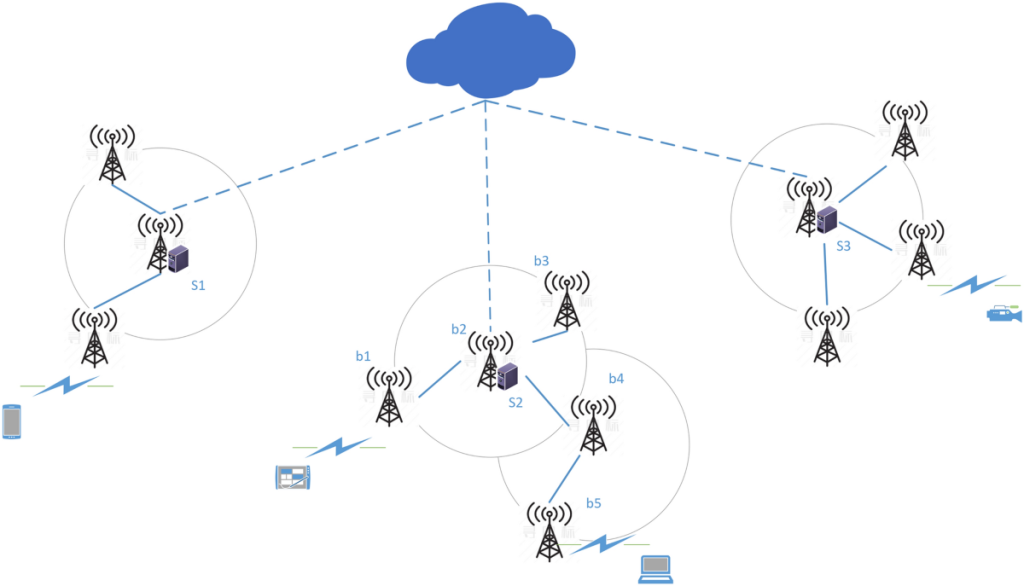
In certain cases, end servers may cache critical information or even your whole website, which is the role of CDNs. CDNs (Content Delivery Networks) are edge servers developed to enhance your service or website performance by reducing server workload.
You are free to approach the Hostonce support team for further information!
The Advantages and Disadvantages of Edge Servers
We have discussed the plus points of edge servers. Let us revisit them.
- Origin servers process fewer requests.
- You may configure edge servers for specific requests.
- Security is increased through the decentralised networking model.
- Users should be able to receive data and load websites faster.
- Edge servers are easy to install in remote locations as they come in all shapes and sizes.
Edge servers are not all rainbows and sunshine. There are particular downsides to them. As you deal with servers in various geographic locations, you will have to implement the right processes for maintaining, monitoring, and updating the devices. Huge businesses often hire edge computing services that fulfil such tasks, resulting in coordination challenges and additional costs.
More servers mean more entry points within your network. If edge servers are not well-maintained or well-configured, then they have security issues, which makes them easier to breach. This puts critical information at risk.
You are better off using a third-party provider unless your organization has the workforce and expertise to set up and maintain edge servers. Check out attractive hosting plans here!

Take your business to the edge literally!
Experience a better website management by choosing edge servers—try an edge server out with Hostonce now!
The Difference Between Edge Servers and Other Networking Models
It is important to go over the differences between other networking models and this one.
Edge Servers vs Origin Servers
There is one or more origin servers involved in a traditional networking model. End users can directly connect to them. User requests go through a simple journey in that model.
- Users attempt to access your app, service, or website by connecting to its server.
- The server returns the needed data after the server processes the requests.
- End users get the data and render it through a browser, app, or application.
Varying by what protocol users are connecting through (FTP, HTTP, or HTTPS), the network structure remains simple. Once you add edge servers in, the network process of user requests will change with respect to how you configure the servers.
Edge Servers vs Cloud Computing
Everyone has heard of cloud computing. Not everyone knows what it means. Yours truly will do the honors to help you learn.
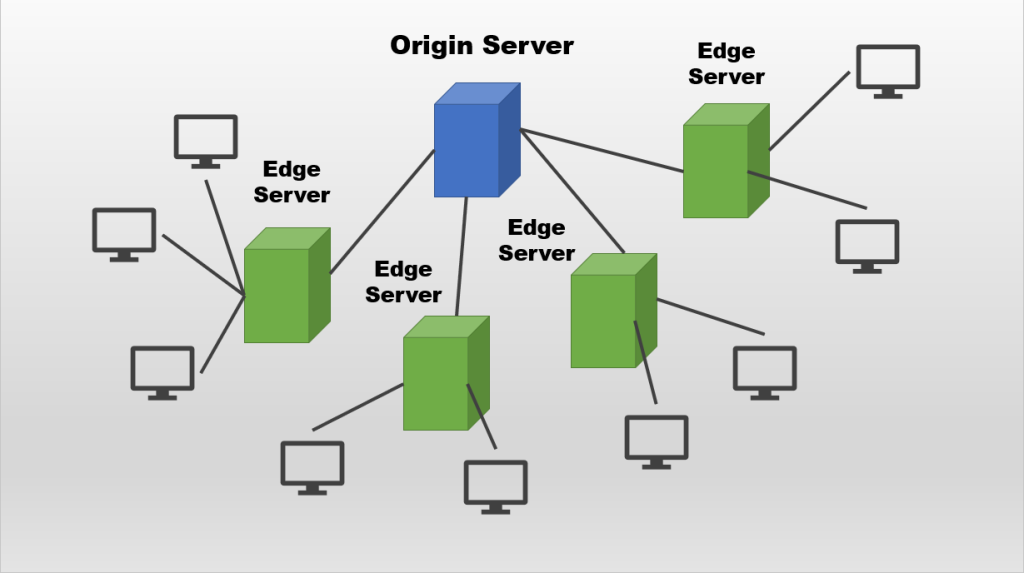
As we explained above, the origin servers use a physical location. Cloud computing allows multiple servers that are connected through the cloud. It means multiple locations can be used to have a decentralized network with servers.
The key advantage of cloud computing is its infinite availability. You can always expand the network by adding multiple servers. You cannot achieve this in a centralized model, as that would limit you to a physical location.
A good cloud computing provider will help you add more firepower to the network and charge you only for what you use. This is how cloud computing is cost-effective and more flexible than traditional data centres.
You can incorporate edge servers into the cloud computing model. Edge servers would still carry out all the operations that they do within centralized networks, but you get to enjoy the advantages of cloud computing as well.
A friendly reminder: the Hostonce knowledge base is full of similar articles intended to share helpful knowledge.
Conclusion
Many big platforms are prioritizing edge servers now. That is because edge servers provide a great alternative to centralizing all the data in a single data center. You can utilize a CDN even if you are running a simple WordPress website as it gifts you faster loading times and overall a smooth experience.
Frequently Asked Questions
How are edge servers different to traditional servers?
Traditional servers are often centralized and tackle all user requests from a limited or single location. Edge servers are distributed across multiple areas, processing data next to users for improved reliability and faster performance.
Are CDNs and edge servers the same thing?
Not really. A CDN (Content Delivery Network) is an edge server which is designed specifically for caching and delivering static content fast enough. Other edge servers can operate the same way, but they can also perform additional functions such as analytics, security filtering, and data processing.
What are the primary challenges of using edge servers?
Management of multiple edge servers can be complex. It requires constant coordination, monitoring, and updates. Improper maintenance or configuration can result in security vulnerabilities.
Can edge servers work with cloud computing?
For sure, they can. Many companies combine cloud infrastructure with edge computing. This hybrid approach enables data processing through edge servers at low costs despite larger workloads.
