On December 15, 2022, WordPress hosted its annual State of the Word event, where co-founder Matt Mullenweg shared updates on the platform’s progress and offered a glimpse into its future. The event brought together contributors and developers from around the world, featuring over 30 watch parties and 500 participants across 11 countries, both in-person and online.
In this article, we’ll look back at the key highlights from the event, explore WordPress’ major achievements in 2022, and also discuss what’s next for the platform in the coming years.
Table of contents
- Open Source and the Four Freedoms: The Core of WordPress Innovation
- Top WordPress Milestones That Defined 2022–2023
- Gutenberg’s Global Expansion and Full-Site Editing
- The Comeback of WordPress Meetups and Global Events
- Learn WordPress: Empowering the Next Generation of Creators
- WordPress.org Redesign: A Modern Experience for All Users
- Openverse Expansion: Free Media for Every Creator
- Major Version Updates and the Completion of Gutenberg Phase 2
- Record-Breaking Contributor Growth and Community Involvement
- What’s Coming After State of Word 2022: WordPress in 2023 and Beyond
- Final Thoughts
- FAQ
Open Source and the Four Freedoms: The Core of WordPress Innovation
The event began with Josepha Haden Chomphosy, Executive Director of the WordPress project, asking an important question: “Why WordPress?”. She took the opportunity to highlight the four fundamental rights that define open-source software. These freedoms form the foundation of WordPress and strengthen its global community.
- Use the software freely for any purpose.
- Explore how it works and modify it as needed.
- Share copies with others.
- Distribute your customized versions.
Josepha explained that these principles, known as the WordPress Bill of Rights, ensure the web remains open, accessible, and collaborative. She also shared a valuable insight from Matt Mullenweg, who told her that open source is more than just a way of developing software. It is an idea with the power to shape an entire generation.
Top WordPress Milestones That Defined 2022–2023
After Josepha’s introduction, Matt Mullenweg took the stage to deliver the much-anticipated State of the Word keynote. He began by reflecting on WordPress’ journey throughout 2022, celebrating the community’s achievements, major updates, and overall growth.

Experience Lightning-Fast WordPress Hosting with Hostonce!
Enjoy SSD and NVMe storage, automatic security updates, and a free SSL to keep your site secure and speedy.
Let’s look back at the key milestones and highlights that defined WordPress in 2022 and its future developments.
Gutenberg’s Global Expansion and Full-Site Editing
Gutenberg, the block-based editor used for building websites and mobile apps, has gained massive popularity across the globe. Matt Mullenweg expressed his belief that Gutenberg’s influence could eventually surpass WordPress itself.
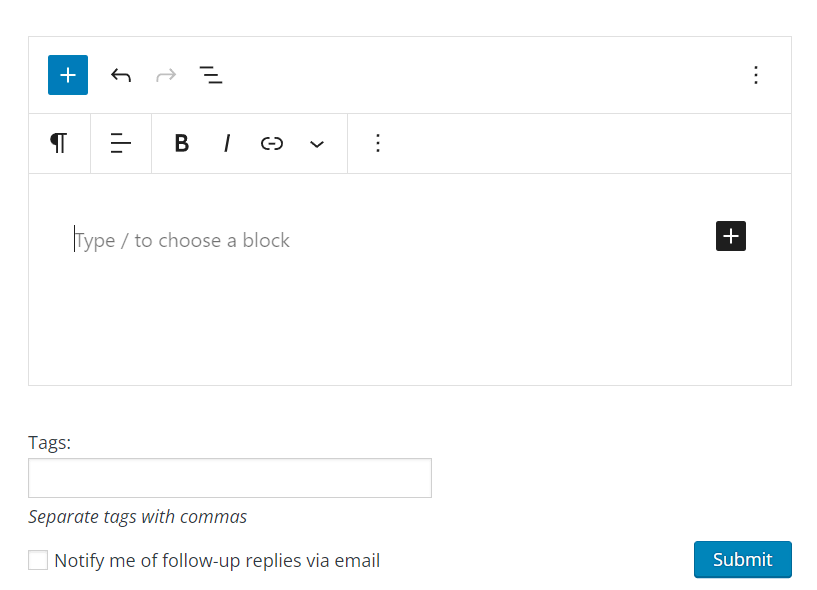
In 2022, bbPress Forums, which power WordPress.org discussions, integrated Gutenberg to make content creation easier. Now users can add links and images without coding HTML. This enhancement was made possible through the Blocks Everywhere plugin, which will also be included in BuddyPress soon.
In addition to this, Gutenberg’s reach has expanded far beyond WordPress websites. For instance, EngineAwesome, a Laravel-based SaaS platform, uses Gutenberg for building dynamic content. The Pew Research Center adopted it for its Political Typology Quiz, which attracted more than a million participants in 2022. Even the web version of Day One, a popular journaling app, now relies on Gutenberg for its editing features.
Matt Mullenweg also shared that the Gutenberg Mobile project has completed its licensing update. Previously, Gutenberg’s GPL license limited its use in mobile apps because of app store restrictions. Now, it’s available under both the GPL and MPL (Mozilla Public License). This makes it easier for developers to embed Gutenberg into mobile applications without running into licensing conflicts.
The Comeback of WordPress Meetups and Global Events
During the COVID-19 pandemic, most WordPress meetups and community events moved online, but by 2022, many returned to in-person gatherings. Matt Mullenweg highlighted that over 500 meetup groups doubled their events that year, reflecting a strong revival of community activity. The number of WordCamps also grew significantly. It increases from just one event in 2021 to 22 in 2022, with more than 34 already planned for 2023, and that number is expected to keep rising.
Learn WordPress: Empowering the Next Generation of Creators
WordPress runs the Learn WordPress platform, which offers courses and community workshops for anyone wanting to improve their WordPress skills. In 2022, around 12,000 people participated in these courses. Matt Mullenweg noted that new course activities were held almost every week and were guided by dedicated volunteers who moderated and facilitated the sessions.
WordPress.org Redesign: A Modern Experience for All Users
In 2022, WordPress.org received a major redesign, updating both its homepage and blog sections. The new look follows a “jazz-inspired” design approach, which Matt Mullenweg hopes will evolve into a unique design style for the platform. Moreover, a notable addition is the Showcase section, highlighting well-known websites built with WordPress and demonstrating the platform’s versatility and creative potential.
Openverse Expansion: Free Media for Every Creator
In 2021, WordPress acquired Openverse from the Creative Commons organization and made it available on WordPress.org. Openverse is a search engine that helps users find Creative Commons-licensed media, including images and videos.
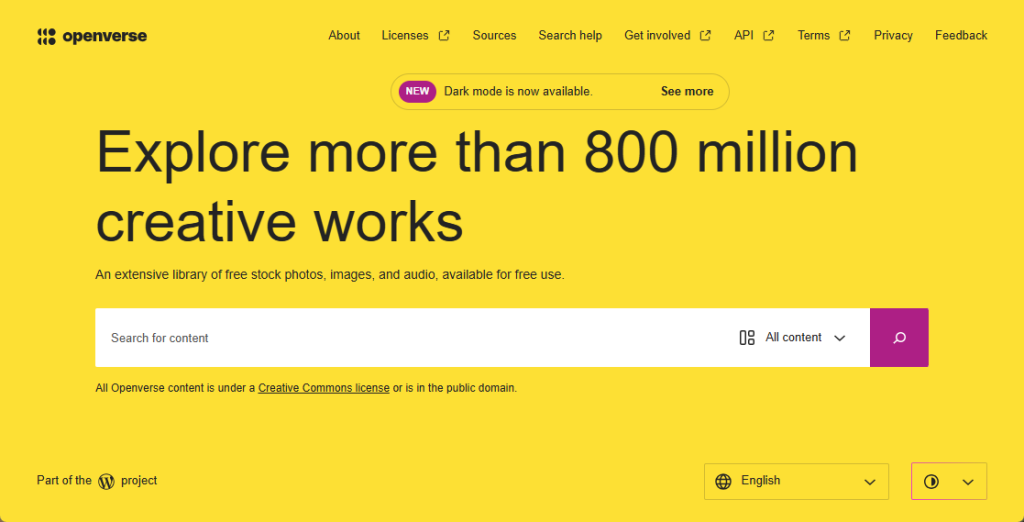
In 2022, audio content was added, allowing podcasters and music creators to share their work with a wider audience. Matt Mullenweg shared some impressive stats for Openverse: it now hosts 22 million images and 1.1 million audio files. It serves millions of users each month and has handled over 59 million requests in the past 30 days. Additionally, photos uploaded to the WordPress Photo Directory are also included in Openverse. This makes it a growing resource for creators worldwide.
Major Version Updates and the Completion of Gutenberg Phase 2
In 2022, WordPress released three major updates that introduced new design tools, making it easier to customize a website’s front-end.
- Block themes allow themes to be built using blocks instead of traditional PHP and CSS, enabling users to create or customize websites directly in the Gutenberg Editor without coding.
- Styles and style variations give users pre-designed options for colors, fonts, and spacing, making it simple to switch between different looks while keeping the same underlying structure.
- The Twenty Twenty-Three theme, unlike previous default themes, provides a blank canvas with ten style variations created by WordPress community contributors, offering flexibility and creativity right out of the box.
Record-Breaking Contributor Growth and Community Involvement
WordPress introduced Gutenberg four years ago, and its development is structured into four phases. The first phase, Easier Editing, replaced the traditional post and page editor with Gutenberg’s block tools, which are already available and continue to improve. The second phase, called Customization, emphasizes creating complete websites with blocks. It also introduces full site editing, pre-designed block patterns, a block directory, and themes built entirely with blocks. The third phase, Collaboration, aims to make content creation more intuitive for teams, while the fourth phase, Multilingual, will add core support for multilingual websites.
Currently, WordPress is in phase two with the release of WordPress 6.1, allowing users to create a theme from scratch using only the Gutenberg editor on the front-end. The upcoming WordPress 6.2, expected in March 2023, will complete this phase. This is enabled by the Create Block Theme plugin, which lets users import Google Fonts and serve them locally. Matt Mullenweg described this system as offering “one theme, one pattern, infinite permutations,” highlighting the endless customization possibilities available through block-based editing.
What’s Coming After State of Word 2022: WordPress in 2023 and Beyond
Alongside reviewing the achievements of 2022, Matt Mullenweg shared plans for WordPress in the coming years, highlighting innovations that continue to shape the platform.
Celebrating 20 Years of WordPress and Its Global Impact
WordPress celebrated its 20th anniversary in May 2023, marking two decades of growth, community collaboration, and innovation. This milestone reflected on the platform’s journey since its launch in 2003 and its effect on the web. Special events and celebrations were organized, and updates were shared on the WordPress 20th anniversary website.
WordPress Community Summit and WordCamp US
After a six-year break, the WordPress Community Summit returned in 2023, coinciding with WordCamp US, bringing together top contributors to collaborate and share ideas. The summit, along with WordCamp US 2025, continues to strengthen the global WordPress community by promoting teamwork, learning, and innovation.
Gutenberg Phase 3: Collaboration and Site Customization Made Easier
Following WordPress 6.2, Gutenberg Phase Three introduced real-time collaboration, allowing multiple users to edit posts, pages, or even entire websites simultaneously. This feature works like Google Docs, showing edits in real time and making teamwork seamless within WordPress. Post revisions now also have an updated interface for reviewing and editing changes, and the media library integrates with Openverse, letting users access media directly without leaving WordPress.
WordPress Playground: Testing and Learning Without Installation
The WordPress Playground, developed by Adam Zielinski, allows users to run WordPress entirely in a browser using WebAssembly, eliminating the need for a local server or hosting. It’s perfect for testing themes, plugins, or trying new designs. The Playground also acts as a staging environment, letting users clone a site, make edits, and deploy changes live. In 2025, it supports PHP 8.3 and experimental XDebug, making it even more useful for developers.
These upcoming features and improvements show how WordPress continues to evolve beyond 2022. WordPress State of Word demonstrates that WordPress offer more flexibility, collaboration, and experimentation opportunities for creators and developers worldwide.
Final Thoughts
The WordPress State of Word 2022 showcased WordPress’s growth, from Gutenberg and block-based themes to WordPress.org redesign and Openverse integration. Contributor activity and community events flourished, highlighting innovation and collaboration. Finally, with Gutenberg Phase Three, real-time collaboration, the Playground, and the 20th anniversary, WordPress continues to empower creators as a flexible, community-driven platform.
FAQ
What were the major WordPress milestones in 2022?
Key highlights include Gutenberg’s expansion, the bbPress integration, revival of WordPress meetups and WordCamps, redesign of WordPress.org, growth of Openverse, and major version updates, including WordPress 6.1.
What is Gutenberg, and how has it expanded?
Gutenberg is WordPress’ block-based editor for creating websites and apps. By 2022, it was used in bbPress, EngineAwesome, the Pew Research Center quizzes, and Day One, with mobile integration improved via dual GPL/MPL licensing.
What are block themes and style variations?
Block themes allow websites to be built entirely using Gutenberg blocks. Style variations let users quickly change a site’s look (colors, fonts, spacing) without affecting the layout.
What is Learn WordPress?
Learn WordPress offers courses and community workshops to help users improve their WordPress skills, with around 12,000 participants in 2022.
