





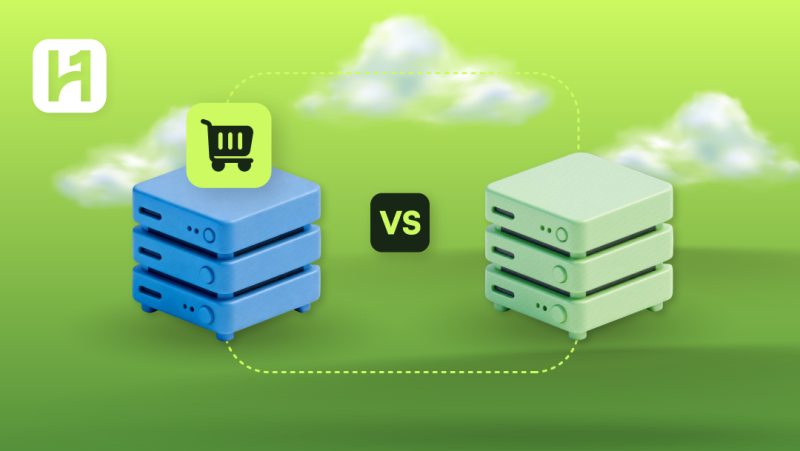
The choice between e-commerce hosting vs regular hosting is difficult. While shared hosting is inexpensive and simple to use, more than 60% of small websites or businesses use it; e-commerce hosting provides the scalability, speed, and security needed to handle transactions and provide a flawless user experience for online shops, marketplaces, or websites with heavy traffic.
Key Takeaways
- High-speed servers, scalable architecture, and strong security measures are features of e-commerce hosting solutions designed for online enterprises that guarantee smooth shopping experiences.
- The performance requirements, security concerns, traffic expectations, and budget of your website will determine which e-commerce hosting is best for you.
- With specialized resources, improved security, optimal performance, and scalable infrastructure, e-commerce website hosting differs from standard hosting.
- As web hosting has a big impact on your brand’s reputation and business operations, it’s critical to select the finest option for your online business.
Learning Basics First – What Is Web Hosting?
Your website can be accessed online with the help of web hosting. When you buy hosting, you rent space on a server. This is a powerful computer that keeps your website’s files (HTML, CSS, photos, and databases) and is always online.
VPS vs WordPress Hosting: Which is Best for Your Website?
By Festus Nkopuruk on November 6, 2025This is how it operates: your browser makes a request to your server whenever someone visits your website. It is regardless of whether they clicked a search result, followed a link, or typed your URL manually. The server subsequently sends the files for your website to the user’s browser, which displays the pages. Usually, this process takes milliseconds to complete.

Grow Your Online Website Now!
Apply smart updating tips while keeping your site fast, secure, and reliable with premium hosting packages from HostOnce!
What Is E-Commerce Hosting?
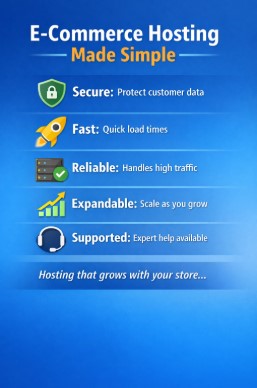
A specialist hosting solution created to meet the particular needs of online retailers is e-commerce website hosting. It offers secure settings to safeguard sensitive customer data, enhanced performance for managing traffic spikes, and integration capabilities with e-commerce systems like WooCommerce, Magento, and Shopify. Faster site loads, high availability, and scalability to handle expanding sales volume and clientele are all guaranteed by e-commerce hosting.
E-commerce Hosting Benefits
- Resource Allocation: Online retailers are guaranteed reliable performance thanks to dedicated server resources.
- Performance: Designed for high traffic numbers and quick load times, which are crucial for conversions.
- Security: PCI compliance for safe payments, firewalls, and SSL certificates are examples of advanced protection.
- Scalability: Easily expands to meet increasing demands for transactions and traffic.
- Support: Availability of specialized, knowledgeable assistance for e-commerce systems and problems.
Ideal Use Cases
- Affiliate Websites: Affiliate websites are ideal for e-commerce hosting. Secure sales tracking and a seamless user experience are guaranteed by dependable performance and security.
- Marketplaces: Several vendors offer their goods on online marketplaces like Amazon or Etsy. The scalability, speed, and reliable infrastructure required to handle heavy traffic are provided by e-commerce hosting.
- Online shops: Because of its dedicated resources, quick load speeds, and sophisticated security features required for effectively managing transactions and client data, e-commerce hosting is advantageous for larger online stores or shops that offer a range of brand products.
Fast, Secure Hosting for Online Stores!
Secure ecommerce hosting for online stores and boost your online growth and performance with high-speed ecommerce hosting from HostOnce.
What Is Regular Hosting?
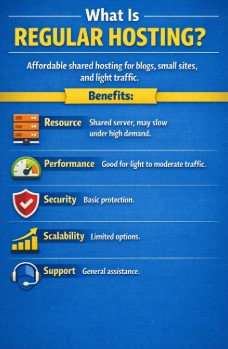
Several websites share the same server resources with regular hosting, sometimes referred to as shared or normal hosting, which is an affordable hosting option. It works well for educational websites, blog websites, and small enterprises that don’t need a lot of resources or strong security. Regular hosting is inexpensive and simple to use, but because of shared resource allocation, it may operate less well during periods of high demand.
Regular Hosting Benefits
- Resource Allocation: Several websites share resources, which could affect performance during periods of high demand.
- Performance: It may slow down when there is a lot of traffic, but it is suitable for light to moderate traffic.
- Security: Simple security measures intended for websites that do not conduct transactions.
- Scalability: Fewer choices for scaling than hosting, with an emphasis on e-commerce.
- Support: General hosting assistance without knowledge of e-commerce.
Ideal Use Cases
- Personal blogs are ideal for anyone who wishes to share ideas, experiences, or original content online without having to deal with expensive server management.
- Portfolio websites are a great way for photographers, designers, authors, and artists to present their work and get in front of potential customers at a reasonable price.
- Hobby-based or community websites can provide a dependable level of performance and do not usually require the advanced features of sophisticated hosting, making them ideal for use by websites providing social networking opportunities (fan sites or bulletin boards) or organizations that receive limited traffic volumes (eg, charities or nonprofit organizations).
- Websites for small businesses (like online stores or online boutiques) are great for establishing a presence on the Internet and providing information to potential clients about products and services, as well as effectively providing contact information to both new and often local customers.
- Websites that do not require high-volume traffic or extensive customization can be effectively developed and maintained using shared hosting services, which provide all the resources necessary to support the usability of the site, along with a reasonably fast Internet connection.
Get Fast And Secure Regular Hosting!
Boost your online growth and performance with high-speed regular or shared hosting packages from HostOnce.
Factors To Choose Between Ecommerce Hosting vs Regular Hosting
Consider these factors while choosing between e-commerce hosting vs regular hosting as per your specialized needs:
E-commerce Hosting vs Regular Hosting – Volume of Traffic and Resource Requirements
Consider traffic and resource requirements while choosing e-commerce hosting vs regular hosting:
- Evaluate the anticipated traffic and server resource needs. Limited CPU/RAM may cause your website to lag, and high traffic might put a burden on shared hosting.
- Regardless of whether you choose a particular website builder, you should ensure that the e-commerce hosting provider you choose will be able to both scale with your website builder and meet your performance needs based on projected traffic volume estimates.
E-commerce Hosting vs Regular Hosting – Seek Out Sturdy Security Features
Always consider security features while choosing e-commerce hosting vs regular hosting:
- Select e-commerce hosting that has several security layers, such as DDoS defense, SSL certificates, and frequent security assessments.
- Robust security safeguards transactions, customer information, and your store.
E-commerce Hosting vs Regular Hosting – Analyze Speed and Performance
- Both user experience and conversion rates are improved by quick loading times.
- To effectively manage heavy traffic, use e-commerce hosting companies with robust server performance and take into account capabilities like Content Delivery Networks (CDNs).
E-commerce Hosting vs Regular Hosting – Look for Options for Scalability
- Make sure your e-commerce hosting plan can expand with your company by providing bandwidth and storage upgrades.
- To keep your store responsive, quick, and ready for development, stay away from hosts that restrict future growth.
Choosing The Right Hosting
The performance, security, traffic, and budget requirements of your website all play a role in choosing the best hosting:
Shared hosting is perfect for community or hobby websites, small business websites, portfolio websites, and personal blogs. It is affordable, easy to use, and offers vital tools for websites with moderate traffic. Shared hosting is appropriate for non-transactional websites that don’t require sophisticated features or scalability because it provides basic security and performance.
E-commerce hosting is ideal for big online merchants, online marketplaces, and affiliate websites. It offers specialized resources, quicker load speeds, and cutting-edge security features like PCI compliance and SSL certificates. With scalability to expand with your company and professional assistance focused on e-commerce technology, e-commerce hosting is made for high-traffic websites.
Expert Tip
Always match your hosting selection to the objectives of your website. Shared hosting is dependable and affordable for small-scale or content-focused websites. E-commerce hosting provides stability, security, and scalability for websites that manage transactions, numerous products, or heavy traffic. Making the correct hosting a top priority right away may save time, cut expenses, and improve user experience, creating a solid basis for expansion and online success.

Final Verdict: For straightforward, low-traffic websites that value affordability and usability, utilize shared hosting. For online businesses or platforms that need high performance, security, and scalability to manage transactions and traffic effectively, go with e-commerce hosting.
Conclusion
Choosing between e-commerce hosting vs. regular hosting depends on your personal needs and requirements. In terms of resource allocation, performance optimization, security features, scalability, and support designed especially for online retailers, e-commerce website hosting is different from traditional hosting.
Compared to the basic shared environment of standard hosting, e-commerce hosting is perfect for e-commerce enterprises because it offers faster loading times, stronger reliability, improved security measures, and specialized tools for handling online transactions.
FAQs
What is regular hosting?
Since shared hosting is the most popular and affordable way for individuals and small businesses to come online, the term "regular hosting" frequently refers to it. A particular, well-liked, and reasonably priced kind of web hosting service is shared hosting, in which several websites share the resources of a single physical server.
Can my e-commerce store use regular hosting?
Yes, but normal hosting carries the risk of slower loading times, inadequate security, and restricted scalability, which can have a detrimental effect on sales and customer trust, even though it is feasible for very tiny or new stores.
What are ecommerce hosting advantages?
Important advantages of e-commerce hosting include increased performance (speed/uptime), strong security (SSL, backups), scalability for expansion, round-the-clock accessibility, simple management (less tech required), improved SEO, and committed support.
Is e-commerce hosting security truly different?
In order to meet with payment security regulations like PCI DSS, which aren't usually included in normal hosting plans, e-commerce hosting does indeed incorporate specialist protections.
Best Web Hosting: Top 10 Providers for 2026
By Javeria Riaz on October 11, 2025
Hostonce is the #1 WordPress Host
Ranked by 930+ customers in G2's Best Software Awards.
