


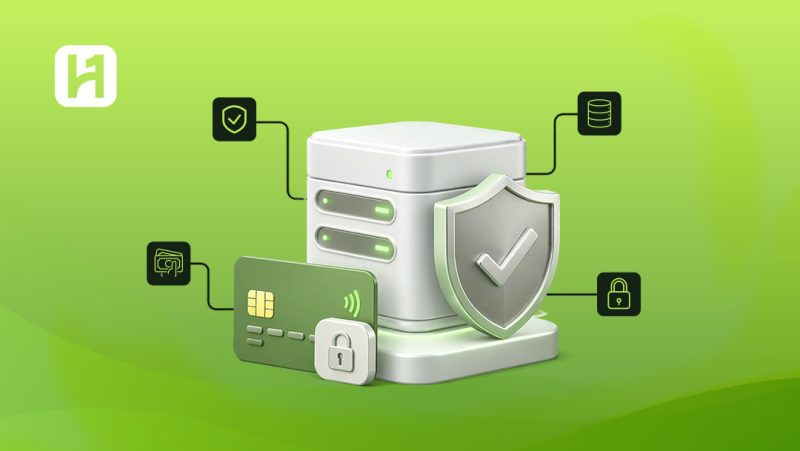
The 2024 Verizon Payment Security Report, revealed that only about 43% of organizations maintain full Payment Card Industry Data Security Standard (PCI DSS) compliance year-round. They also report that 97% of data breaches are financial and are directed at stealing cardholder data. This means that about 57% of organizations are vulnerable to hacker attacks intended to steal cardholder data. The risk of hacking and data theft underscores the importance of PCI-compliant hosting for customer data security.
This article will explain what PCI and PCI-compliant hosting are, why it is important, and how websites can become PCI compliant.
How to Prevent DDoS Attacks: Tips from Security Experts
By Festus Nkopuruk on August 7, 2025Key Takeaways
- 97% of data breaches are financial and is directed at stealing cardholder data.
- Hosting your website with PCI compliant hosting providers doesn’t make your site PCI compliant. There are some things you have to do yourself to be PCI compliant.
- For your site to be PCI compliant, it must possess features and policies to keep your customer’s data safe
- Hosting providers offering PCI-compliant hosting must offer secure web hosting environments with firewalls, data encryption, strict access controls, and regular security testing.
- Non-compliance with PCI DSS could result in fines, increased transaction fees, or reputational damage, especially if customer data is hacked.
What is PCI DSS?
PCI DSS means Payment Card Industry Data Security Standard. It is a set of security standards that has been created to ensure that customer payment data is handled securely. PCI DSS compliance is compulsory for any company that accepts, stores, or transmits credit card data. This includes online stores and every other kind of business or platform that accepts card payments. Companies or businesses that do not comply with PCI DSS hosting requirements face the risk of being fined. They also risk damage to their reputation if their customer fata is hacked as a result of their negligence.
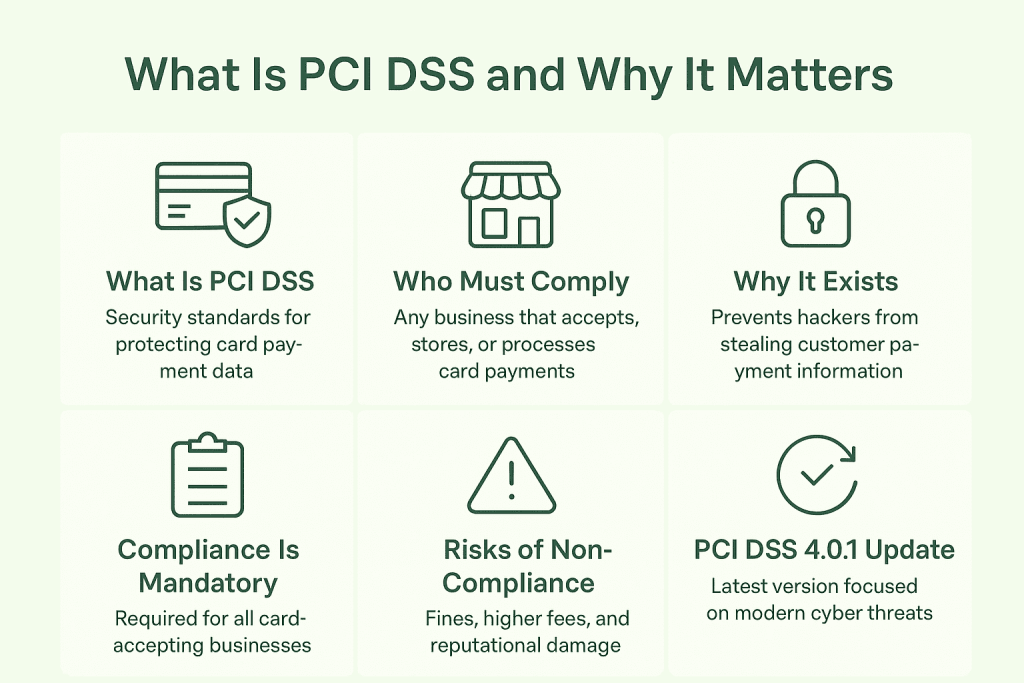
The PCI DSS was established in 2006. It was established to ensure that customer payment data is secure especially when making payments using bank cards or other means of cashless payments. It is meant to prevent hackers from getting their hands on customer payment information. The latest version 4.0.1 released in March 2025 has some advanced features designed to tackle evolving cyber threats. The version was designed with a strong focus on data encryption, access controls, vulnerability management, phishing prevention, and e-commerce security.
If you manage payments or collect customer data on your WordPress site, it is important that you understand what is required for your site to be PCI compliant.

Keep Your Customer’s Data Safe
Hostonce hosting is PCI compliant, providing the necessary security measures to keep your user data safe.
Is Hostonce a PCI Compliant hosting Provider?
For a hosting provider to be identified as PCI compliant or provide PCI DSS hosting, they have to provide the necessary conditions for PCI compliance hosting. These provisions are to ensure that their customers’ websites meet the demands of PCI DSS hosting i.e the sites are secure and customer data is kept safe.
Hosting providers offering PCI-compliant hosting must offer secure web hosting environments with firewalls, data encryption, strict access controls, and regular security testing. This makes it easier for businesses to handle payments safely, thereby avoiding data theft and fraud.
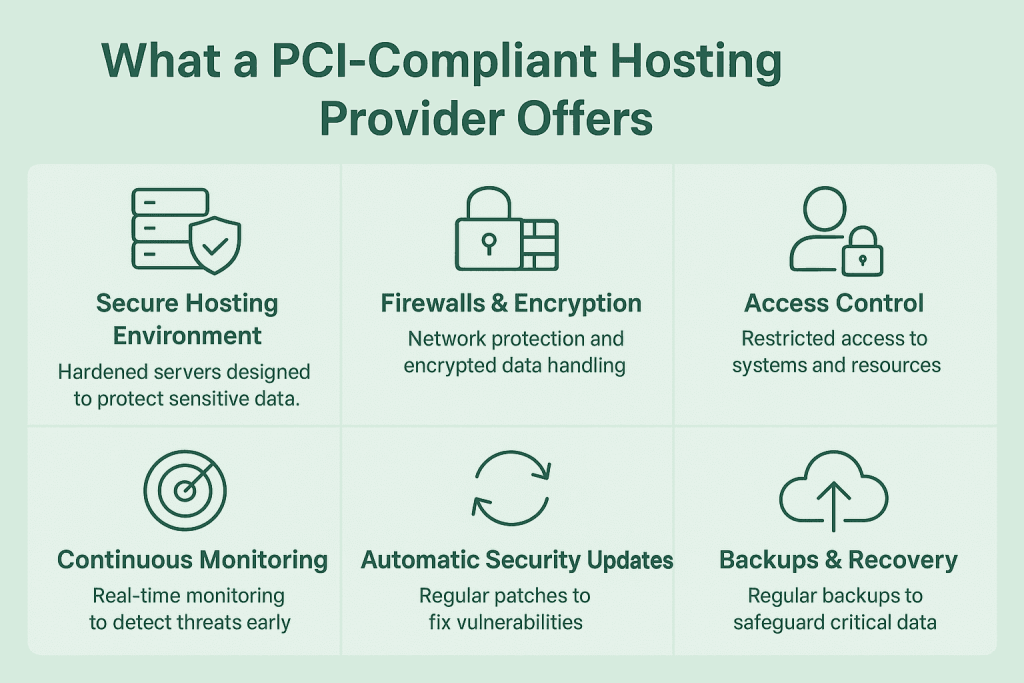
Hostonce offers managed WordPress hosting, which means it handles stuff like regular security patch updates. Hostonce is responsible for 24/7 real-time monitoring, BitNinja security, dedicated firewalls, free SSL certificates, and regular security backups, providing your site with the relevant security features it needs. This makes Hostonce a PCI-compliant hosting provider. It is, however, important to note that using a PCI-compliant hosting provider does not make your site PCI compliant; it only makes it easier for you to meet PCI DSS requirements. Here are some major requirements you must meet for PCI hosting.
How to Be PCI Compliant
Basically, there are 12 requirements that businesses or websites that manage payments and collect customer data must meet to be PCI compliant. These are the baseline standards that they must meet to ensure that customer card data is properly secured. Here are the 12 PCI compliance requirements.
Maintain a security policy
Business websites that manage payment and collect customer data must document their security policies so that everyone involved in the security process understands their roles.
Use firewalls to protect data
Firewalls on WordPress websites help to filter network traffic and block unauthorized access. This ensures that only an authorized few can gain access to customer data.
Change default passwords and settings
For software and payment gateways integrated into your site, do not keep the default credentials. You need to have your own unique credentials and use strong, unique passwords. This helps to keep your site safe and prevents vulnerabilities to hackers.
Need Help Managing Your WordPress Site?
Power your site with Hostonce Managed WordPress hosting, crafted for speed, security, and simplicity.
Protect stored card data
Limit how much of cardholder data you store on your website. The less data you keep, the smaller the risk in case of attacks. It is also important to encrypt the cardholder data your site holds.
Encrypt data in transit
When data has to move over public or untrusted network, it is important to encrypt such data using TLS.
Use anti-virus and anti-malware
This helps to identify and limit the impact of malicious software or virus that could come with third-party apps or WordPress themes and plugins.
Keep systems and applications secure
Regularly update your site’s security patches. Also, it is important to identify and fix any errors quickly to avoid vulnerabilities. Using a managed hosting plan which is offered by hosing providers like Hostonce can help with this.
Restrict access to cardholder data
Only people who need access to customer data to do their job should have access to this data. This helps to reduce the risk of data hacks.
Assign unique IDs to users
Generating unique Is of every user makes it easy to track all access to the customer’s card holder data and check any inconsistencies.
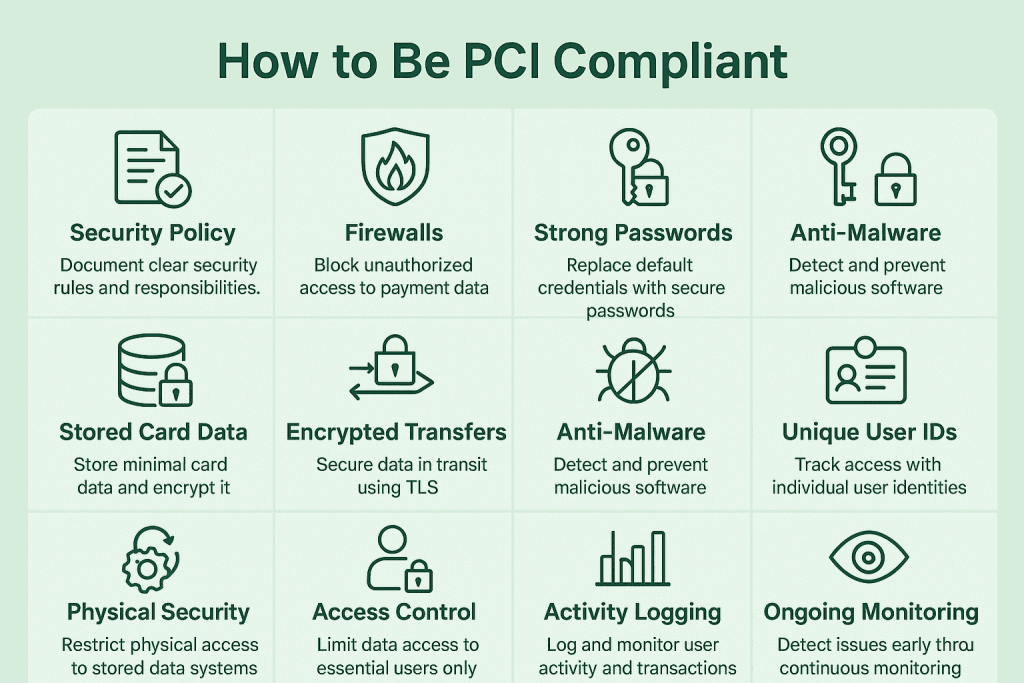
Control physical access
Physical devices where customer data is stored should not be accessible to the public. Access should be limited to authorized users only.
Log and monitor access
Maintain logs to track user engagements including sign ins and transactions. This would help to spot and address inconsistencies on time
Test security systems regularly
Run regular tests to ensure that there are no vulnerable aspects of your site. You can also take the PCI Self-Assessment Questionnaire (SAQ) to check the level of your site’s compliance.
Expert Tip
Always combine PCI-compliant hosting with strong internal practices—like encrypted databases, multi-factor authentication, and regular security audits. Hosting alone doesn’t guarantee compliance, but pairing it with proper internal controls dramatically reduces your risk of data breaches.

Asides the above mentioned, the PCI version 4.0.1 also introduces some new requirements. The requirements can be summarized under the following:
- Stronger Encryption and Data Protection: Businesses should protect customer data using cryptographic keys that cannot be reverse-engineered by hackers.
- Cryptographic Inventory and Risk Assessments: This involves doing an annual check on encrypted data to be sure their protection is still strong.
- Enhanced E-commerce Security: Any unauthorized changes to JavaScript running on payment pages must be quickly detected and addressed to prevent web attacks.
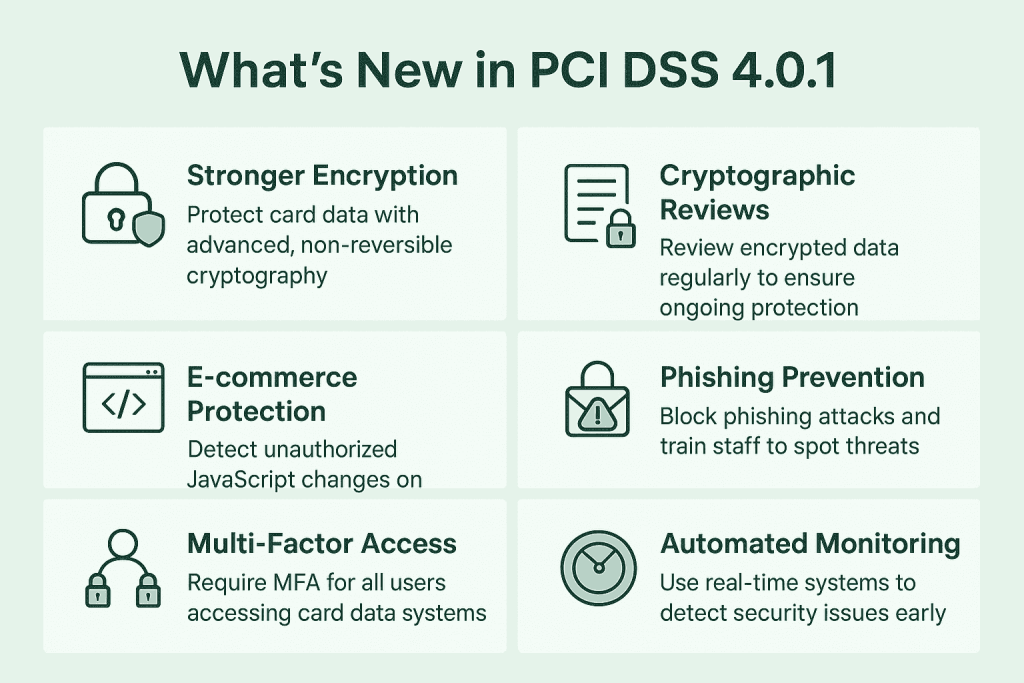
- Phishing Prevention and User Training: Businesses must use tools that detect and block phishing attacks. Employees should be trained regularly to recognize suspicious emails or messages and report them before anyone falls for a scam.
- Stronger Access Controls: Multi-Factor Authentication (MFA) is now required for all users accessing the Cardholder Data Environment (CDE), not just administrators or remote users. This is to improve the security of the website.
- Automated Security Monitoring: Companies should ensure the use of automated security monitoring systems to detect security issues in real-time so as to catch vulnerabilities early.
- Stricter Inventory Management: Businesses must keep track of old hardware and software and have clear plans to secure, update, or replace them. Using outdated WordPress plugins, software and systems without protection creates big security risks.
Enjoy Site Security With Hostonce
With Hostonce hosting, you get free SSL certificates, dedicated firewalls, BitNinja security and regular security updates to keep your site safe
Conclusion
Sites with integrated payment gateways are targets for hackers looking to steal cardholder data. To avoid this, the PCI DSS was created. Compliance with the PCI DSS hosting requirements helps to ensure that customer data is properly handled and kept out of the reach of hackers. Hosting your website with a PCI-compliant hosting provider helps to make your compliance easier. By providing dedicated firewalls, SSL certificates, and secure servers, your hosting provider plays a huge role in helping you stay compliant by providing easy and safe PCI hosting.

22 Best WordPress Security Plugins to Protect Your Site
By Festus Nkopuruk on August 8, 2025FAQs
Who needs to comply with PCI DSS?
Any business or website that accepts, stores, or transmits credit card data must comply with PCI DSS. This includes online stores, subscription platforms, and even mobile apps that process payments.
What happens if a business is not PCI DSS compliant?
Non-compliance can lead to fines, higher transaction fees, reputational damage, and increased risk of data breaches, which can result in loss of customer trust.
What does PCI-compliant hosting mean?
PCI-compliant hosting provides secure servers, firewalls, SSL certificates, and other features that help businesses meet PCI DSS requirements more easily. It does not automatically make your site PCI compliant but supports your compliance efforts.
Does using PCI-compliant hosting make my site PCI DSS compliant?
No. While PCI-compliant hosting provides essential security infrastructure, your business still needs to implement required practices, such as strong passwords, encryption, and access controls, to achieve full compliance.

Hostonce is the #1 WordPress Host
Ranked by 930+ customers in G2's Best Software Awards.