
In 2026, Facebook is still one of the most impactful marketing tools available to small businesses. Facebook has 3 billion monthly users and is the biggest social network. 200 million businesses are actively trying to reach these customers. Users spend upwards of 30 minutes a day on social media and many consumers state they learned about a brand via social media ads. For small businesses with limited budgets, this is a great opportunity.
The reach is not the only thing that makes Facebook valuable. Facebook ads allow precise targeting via location, interests, and behaviors for a fraction of the cost of traditional marketing. Facebook even allows ads for as little as a couple of dollars a day. Moreover, Facebook is great for organic growth as well, through building a community via posts and groups. The effort to spend dollars is great for growing businesses that need advertising flexibility.

Is Dropshipping Worth it in 2026? Pros and Cons
By Festus Nkopuruk on August 2, 2025Key Takeaways
- In 2026, Facebook will still be one of the most effective marketing channels for small businesses because of the large user base and effective advertising tools.
- An optimized Facebook Business Page is a digital storefront and customer trust builder.
- The most effective Facebook marketing requires a mix of organic posts for greater engagement and paid advertisements for quicker growth.
- Knowing your audience and employing Facebook’s targeting options will increase engagement and conversion.
- Achieving reliable outcomes using Facebook marketing demands consistency, testing, and slowly increasing scale.
Table of Contents
- What Is Facebook Marketing for Small Businesses?
- Why Facebook Is Important for Small Businesses
- Setting Up Your Facebook Business Presence
- Understanding Your Target Audience on Facebook
- Facebook Advertising for Small Businesses
- Creating High-Converting Facebook Ads
- Common Facebook Marketing Mistakes Small Businesses Make
- Tools to Help with Small Business Facebook Marketing
- Final Thoughts
- FAQ

Launch Your Website Today
No matter which path you choose, you need a strong hosting foundation to grow online. Get secure, fast, and beginner-friendly web hosting to power your digital journey.
What Is Facebook Marketing for Small Businesses?
Facebook Marketing for eCommerce businesses is the practice of advertising your brand and services to the most fitting audience using Facebook. It encompasses creating a business page, posting, engaging, and using Facebook’s advertising tools to increase visibility. The building blocks of Facebook marketing include content, targeting, engagement, advertising, and performance tracking.
There are two types of Facebook marketing: organic and paid. Organic Facebook marketing is building audience and trust over time, without monetary investment, through methods such as posting, video creation, and liking, replying, and commenting on posts. Paid Facebook marketing is leveraging Facebook ads but it is advisable to first establish a promotional offer to increase audience rapidly and guide traffic/leads to your business.
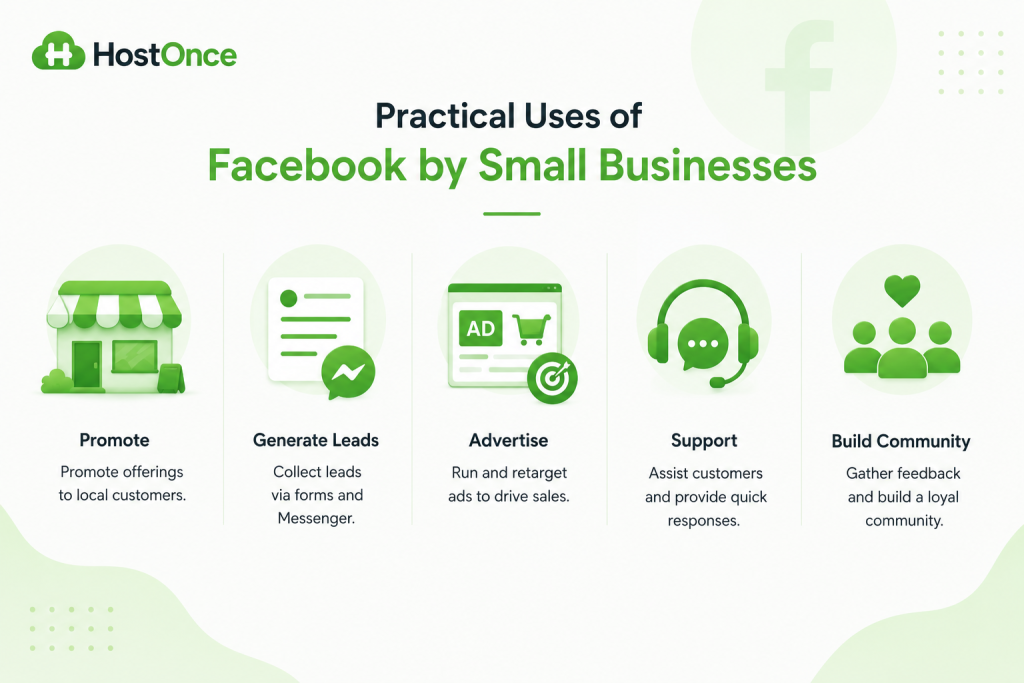
Practical uses of Facebook by small businesses are relatively straightforward. Local businesses promote their offerings to passersby; hosting service providers gather leads via form and Messenger, and eCommerce advertisers display and retarget ads. Some others use Facebook to assist customers, request feedback, and build a community around their brands.
Why Facebook Is Important for Small Businesses
Facebook is valuable to small businesses because of the sheer number of users on the platform and the number of users on the platform. Facebook’s large user base allows businesses to target ads to all cohorts, people of all age demographics, but especially older demographics who are purchasing.
Compared to other digital platforms, Facebook Ads is more affordable. Thanks to enticing starting budgets, small businesses can quickly conduct cost-effective ad tests, and further invest in more successful ads. In addition to minimizing expenses, Facebook’s precise targeting optimizes the ROI by ensuring your advertisements reach the best prospects.
Setting Up Your Facebook Business Presence
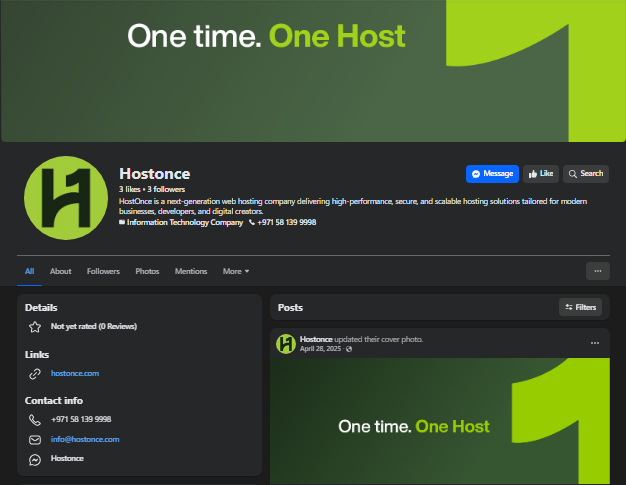
There are many advantages of having positive customer interactions on Facebook. To start taking advantage of those benefits, you need to have a properly optimized Facebook page that serves as a valuable tool to attract and communicate with customers.
Creating a Facebook Business Page
When you create a Facebook Business Page, you need to select a category. The category that you select influences how the Page will appear on Facebook in search results and what features will be available to you. Categories to consider include online store, service provider, or local business.
Completing your page with basic info helps customers and makes your page look legitimate. Ensure your business name, hours, phone number, address, and website are listed along with the description. New customers will take you more seriously if the page is complete.
Optimizing Your Facebook Page for Conversions
Purposefully branded images tell your customers a lot. To have a strong Facebook presence, use a logo as your profile picture and find a relevant value cover image, such as a promotion or picture message, to complete the look of your page. Your customers should be able to recognize your brand instantly, which makes consistency important.
Your conversion rates will be significantly impacted by the About section, the CTA button, and the contact info. Write a concise and beneficial description, finalize the CTA selection as “Call Now”, “Shop Now,” “Send Message,” etc. or any other accurate CTAs, and ensure the contact details are correct. This enhances usability and increases the likelihood of visitors taking the desired action.
Understanding Your Target Audience on Facebook
The foundation of proper Facebook marketing is an unwavering understanding of who you want to reach. In an attempt to clarify the concept of understanding the audience, defining personas is recommended to gain a clear understanding of the customer’s age, location, interests, pain points, and purchasing patterns. With understanding of the personas, it becomes easier to create actionable content that is complemented by effective ads.
The Audience Insights tool provides a deeper understanding of the audience you are trying to reach by tracking their demographics, interests, and behaviors online. This tool identifies the content that your potential audience interacts with.
Facebook’s audience targeting features go far beyond age and gender. For example, location, interests, behaviors and past engagement with ads or posts are features available to small businesses, ensuring their ads and content reach the people who are more likely to engage, or convert. These targeting capabilities truly enhance the chances of achieving conversions.
Facebook Advertising for Small Businesses
Small companies on Facebook have the chance to outpace competition and access new client bases. Even the smallest budget can lead to positive outcomes if the ads are segmented correctly.
Types of Facebook Ads
There are many types of ads to choose from. These include picture and video ads, lead ads, and carousel ads. Each type has its own function, which can be one of the following: raising brand awareness, creating and directing traffic, and an end goal of generating a lead.
Ads can be made and boosted directly from the Facebook post, and this can be done very quickly. However, the better option for long-term success would be to create the ad from the Ads Manager tool. This advertising approach allows for better control, and this tool offers more diverse options for ad targeting and performance tracking.
Grow Online with Confidence
Take the next step toward building your digital presence. From hosting to tools that support your growth, Hostonce has everything you need to succeed—whether you’re starting a blog or scaling a business.
Setting a Budget for Facebook Ads
Facebook offers two options for setting the budget for Facebook ads which include daily budgets, and lifetime budgets. Daily budgets are good for ongoing campaigns, while lifetime budgets work well for time-limited promotions.
Small companies on Facebook typically spend between $5 and $20 for each day’s ad budget to start, while they are learning and testing the returns each ad spend gets. Once the ad spend is fine-tuned for positive outcomes on performance, the ad spend can be increased to the point of scaling. The main focus on the budget is testing or modelling ad spends, and then based on the performance, scaling the spend on profitable ads.
Targeting and Retargeting Strategies
Facebook has a custom audience feature for targeting loyal clients. These more engaged users are more likely to convert because they are already familiar with the brand.
Lookalike audiences allow you to reach new potential users who exhibit similar behaviors and purchasing trends to your most valuable customers. Furthermore, various levels of retargeting allow you to remain visible to users who did not convert on their previous engagement. This approach continuously improves campaign performance and drives down associated ad costs.
Creating High-Converting Facebook Ads
The first step towards creating high-converting advertisements is writing persuasive ad copy that clearly states the benefits. Directly address the potential customers pain points and demonstrate how your service or digital product is the best solution. It has been proven that compared to more lengthy descriptions, ads perform better with succinct and simple sentences, especially when it comes to mobile devices.
The ad text is not the only important aspect, equally important in fact, is the ad image and/or video. Ensure that any video is short and engaging so that you grab the users attention. Any image or video that you use should be high quality and should capture your audience’s attention almost immediately. If you need to add text to the image, ensure that it is large and easily read, especially on mobile devices.
The ad copy should also contain an appropriate call-to-action, which should be based on what you want your users to do. Whether it is to generate more leads, encourage more sales, or drive more website traffic, the CTA button should match the overall goal of the campaign.
Ad Element vs Best Practice
| Ad Element | Best Practice |
| Headline | Clear benefit or solution |
| Visual | High-quality image or short video |
| Text | Short, problem-focused copy |
| CTA | Action-driven and goal-specific |
Common Facebook Marketing Mistakes Small Businesses Make
The first of which is having no clear outline or marketing strategy before you start posting. This results in poor engagement and highly inconsistent results over time. It is important that every post you make be purposeful and be aimed at educating, converting, or engaging users.
You should also consider the potential impact that delayed replies to comments and messages can have on trust and overall visibility. Facebook tends to favor pages that have high levels of activity, and customers have been shown to expect rapid responses when it comes to messages and comments on the ads. If an interested potential customer has to wait for your response, you risk losing the opportunity, and may even create a poor impression of your brand.
Another mistake is spending a lot of money on advertising without load testing first. Spending a large amount of money on advertising that has not been tested ads is a waste of money. Small businesses should test several ads and use multiple creative strategies, audience targeting, and messages before scaling spending on advertising.
Expert Tip
Don’t just chase reach—focus on meaningful engagement. Use Facebook Insights to identify when your audience is most active, then schedule posts during those peak times. Pair this with consistent A/B testing of your creatives (images, captions, and CTAs) to learn what actually drives clicks and conversions. Small businesses often win not by posting more, but by posting smarter and refining what works.

Tools to Help with Small Business Facebook Marketing
Time saving and performance improvement is a result of using the correct tools. Marketing automation and content tools allow you to schedule posts ahead of time and keep consistency without the need to post on a daily basis manually.
Insight on what is working and what is not working is provided by automated analytics and ad optimization tools. It helps you adjust your strategy and improve your return on investment by tracking engagements, clicks, and conversions.
Professionals can use design tools aimed at ad creatives which allow people without advertising knowledge to create great graphics. Consistent branding is aided by these tools and is a result of educated guesswork from the experts.
Tool Type vs Purpose
| Tool Type | Purpose |
| Scheduling Tools | Plan and automate posts |
| Analytics Tools | Track performance and insights |
| Ad Tools | Optimize targeting and budgets |
| Design Tools | Create visuals and ad creatives |
Final Thoughts
Marketing on Facebook is a great strategy to employ for small businesses to grow. There are several steps to appreciate the value of Facebook for small businesses. Understanding your audience by creating engaging content and using ads to reach your customers on Facebook. Every step helps in creating visibility to gain the customer’s trust and increase the conversion rate.
Commitment and continual testing are the things that differentiate the top Facebook marketers. Learning to distinguish what works well for your business comes from commitment to consistent posting engagement and testing varying ad creatives audiences and budgets. Little tweaks over some time accumulate to bigger results.
New marketers should take this advice and start small, then scale up. Keeping things simple, small ad budgets, and performance tracking should be the main focus. Once patience and experimentation finish, reinvest into the ads what performed well. With time, Facebook will become a consistent and cheap marketing platform for your small business.
FAQ
How long does it take to see results?
Organic results usually take a few weeks of consistent posting. Paid ads can generate traffic, leads, or sales within days when set up correctly.
Is Facebook still effective compared to Instagram or TikTok?
Yes. Facebook offers stronger targeting, better tools for local businesses, and higher buying intent, especially for adults and service-based businesses.
Do small businesses need to run ads to succeed?
Not always. Organic strategies can work, but ads help speed up growth, reach new audiences, and compete more effectively.
How much should a small business spend on Facebook ads?
Many small businesses start with $5–$20 per day. The key is testing small budgets first and scaling what performs well.
Start Your Online Boutique in 2026: Easy Step-by-Step Launch & Growth Guide
By Festus Nkopuruk on August 2, 2025
Hostonce is the #1 WordPress Host
Ranked by 930+ customers in G2's Best Software Awards.