


There are 5.3 billion internet users worldwide who spend an average of 6-7 hours a day online. This makes digital marketing a necessity. 93% of internet users use a search engine, and 9 out of 10 users carry out online product research before they make a purchase. There are more than 5 billion social media users, and email marketing makes, on average, $36-$42 for every dollar spent.
The ability of digital marketing to reach target audiences and measure results makes it a preferred choice for businesses seeking to attract and retain customers.. This guide will provide an overview of digital marketing, why it matters, and the essential approaches businesses use today to improve visibility and achieve sustainable growth.
The 23 Best Affiliate Marketing Tools to Increase Sales and Drive High-quality Traffic
By Javeria Riaz on June 5, 2026Key Takeaways
- To connect with potential consumers and customers online, businesses are employing targeted, measurable, and cost-effective strategies through digital marketing.
- Services offered include SEO, content marketing, social media, email marketing, PPC, and influencer marketing.
- Automated data and analytics are what help customers move through the funnel to conversion.
- Some of the perks of digital marketing are increased engagement, a greater ability to track ROI, and the ease of scaling campaigns.
- To meet overall success, the business must set clear goals, know its audience, pick the appropriate marketing channels, and be prepared to make ongoing changes.

Grow Online with Confidence
Take the next step toward building your digital presence. From hosting to tools that support your growth, Hostonce has everything you need to succeed—whether you’re starting a blog or scaling a business.
What Is Digital Marketing?
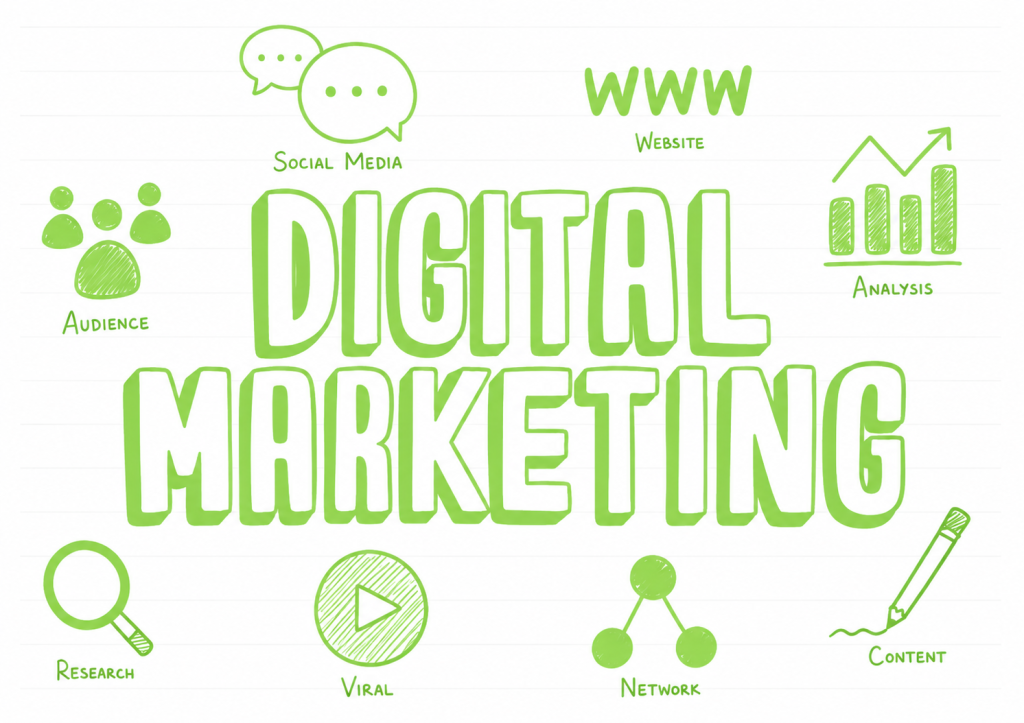
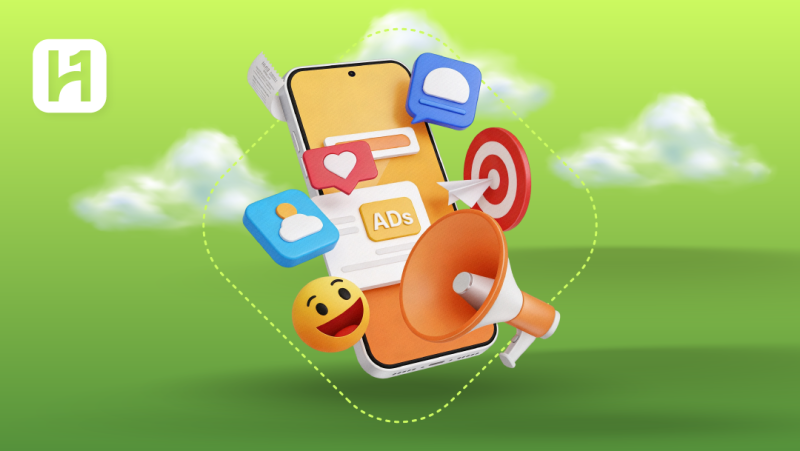
Digital marketing is one way businesses promote their products and services online using web tools and resources. Digital marketing involves search engine advertising (Google Ads), search engine optimization (SEO), social media and content marketing, email marketing, and online display advertising. In essence, digital marketing helps businesses capitalize on the fact that customers spend a very large proportion of their time online.
Digital marketing helps businesses reach intended audiences online in a way that is timely and relevant. When intended customers are looking for a solution, scrolling through social media, or reading an email, digital marketing helps brands remain available and visible to customers. Digital marketing is an essential part of a business’s online presence and visibility.
Why Digital Marketing Is Important
Digital marketing is of great importance, especially because of the rise of mobile devices and the internet. People spend a significant amount of time on various social media apps and searching the internet. As a result, businesses face increased competition and are often forced to invest more in their marketing efforts to stay ahead of competitors
Finally, results and their measurement can be instantaneous. Digital marketing tools measure and report the tracking performance on almost an instantaneous basis to the business. The data-driven companies, through digital marketing tools, positively push down marketing costs to help drive focused result strategies. This allows the business to quickly focus on result-driven strategies and remove those that are less effective in driving results.
Types of Digital Marketing Strategies
Digital marketing covers multiple strategies and approaches, targeting different audiences at different phases of the customer journey. Out of the many strategies, here are the most applicable and general digital marketing strategies.
Search Engine Optimization (SEO)
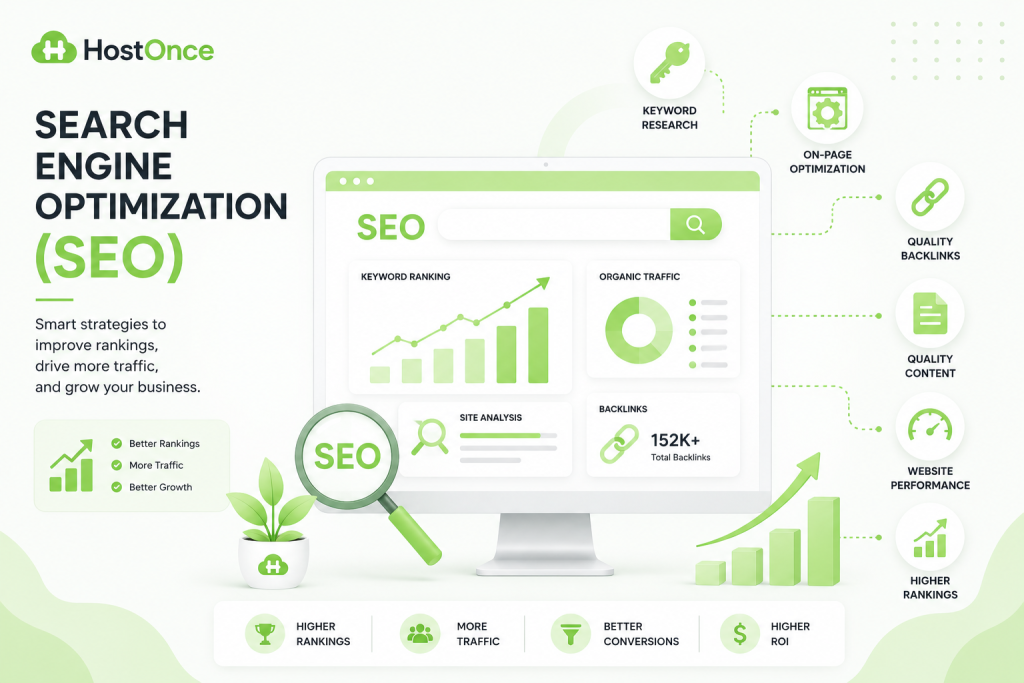
Search Engine Optimization (SEO) is the act of attempting to make your website become visible to users organically on the results page. There are multiple aspects of SEO, such as on-page, off-page, and technical SEO. On-page SEO can be described as optimizing certain clickable content, such as meta titles and meta descriptions, as well as the website text (keywords), among a few others. Off-page is considered to be brand mentions and backlinks to the site. And finally, for technical reasons, it is the loading speed of the website, mobile responsiveness, and crawlability by search engine bots.
SEO is a vital component of any digital marketing strategy, as it is a good source of high-quality website traffic, which leads to a more trusted, engaged, and long-lasting audience to the website without the worry of constantly having to pay for ads. Rather, it is about working on achieving a long-term goal and consistently improving the website, which leads to the website being a good match for the search terms being searched.
Content Marketing
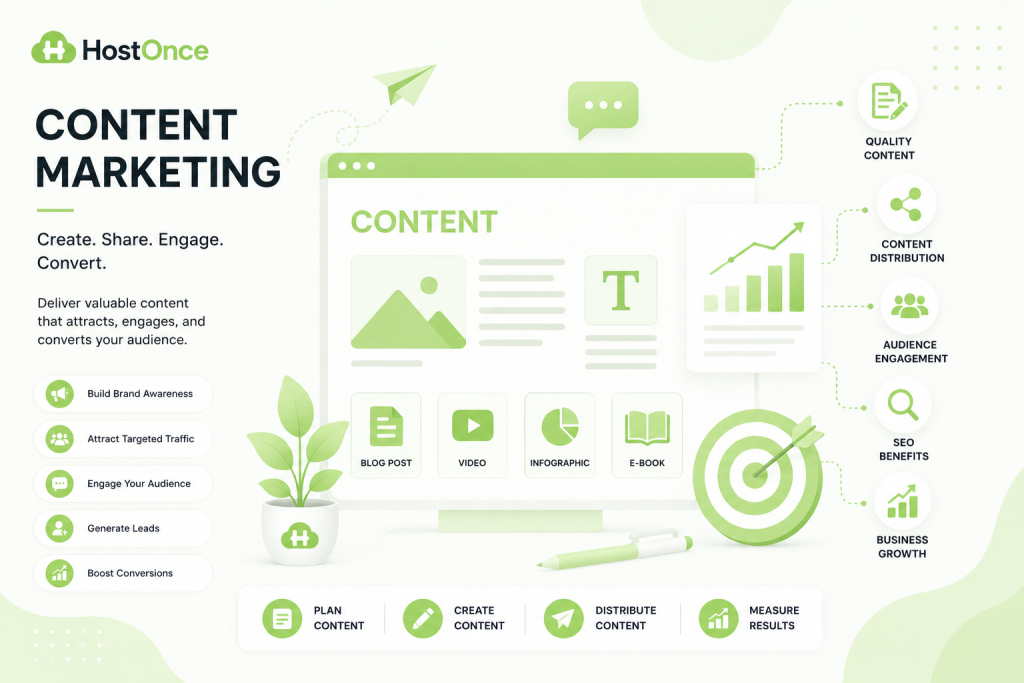
The digital marketing strategy that addresses different questions and problems your audience may have, without selling directly, is content marketing. It encompasses the teachings and the value that navigating your audience can obtain through different formats and media such as blogs, videos, infographics, ebooks, and/or guides.
Building credibility and overall brand trust from an audience can be gained through consistently posting content and navigation guides that assist the audience in solving their problems. Furthermore, the creation and publication of strong content can enhance the overall value and performance of the other digital marketing strategies, such as SEO, email, and social media marketing. It is the foundational support of other strategies.
Social Media Marketing (SMM) refers to promoting content, services, and products through the advertising tools available on social networking sites such as Facebook, Instagram, LinkedIn, and X. It helps brands become visible and engage with users, and lets them create communities online.
SMM can involve organic and paid approaches. Organic social activities include posting and engaging with communities on the platforms. Paid social approaches include sponsored posts and targeted advertisements. Organic social activities create relationships over extended periods of time, while paid social approaches work on quick reach and target niche audiences.
Pay-Per-Click Advertising (PPC)
Pay-Per-Click (PPC) Advertising refers to ads where businesses can promote their products, offerings, and ads on social networks and Google Ads and pay for them only when the ad is clicked. PPC ad campaigns can be customized or narrowed down to specific keywords, demographics, locations, and user intent.
The main benefit of PPC Advertisements is the ability to gain visibility immediately. SEO is a long-term strategy that takes time and focus on how to position a website. With PPC Ads, a website can be placed at the top of a search engine’s results or social media feed immediately. This is very useful for advertising a new product or a time-sensitive promotion.
Expert Tip
Don’t treat digital marketing as a collection of separate tactics—think of it as one connected system. Whether you’re working on SEO, content, or paid ads, always align every strategy with a single goal: moving the user closer to conversion. Use data from tools like Google Analytics to track user behavior across channels and continuously refine your messaging based on what actually drives engagement, not assumptions.

Email Marketing
Email Marketing is a form of direct marketing where a company’s potential or existing customers are targeted via their email. This form of communication is very cost-effective, making it a highly used form of digital marketing with strong ROI.
In today’s world, email marketing happens with automated campaigns, such as welcome messages, notifications, reminders for abandoned carts, and follow-ups. With these automated campaigns, companies have the ability to maintain a relationship with the customer and assist with the ability to streamline multiple sales in a persistent fashion.
Affiliate Marketing
One of the automated email campaigns, like follow-ups, is heavily used in a digital marketing strategy called affiliate marketing. In affiliate marketing, it is a digital strategy where a company sponsors an affiliate to receive payment, and in return, the affiliate markets the company’s services or products to receive a commission.
This affiliate marketing strategy is low risk to companies because payment is only required when a marketer generates a lead. However, it is beneficial for companies because the company is able to gain exposure through affiliate sponsors, and as a result of the marketing, the company can gain respectable affiliate sponsors to market the company’s services and products.
Influencer Marketing
Another strategy is influencer marketing, where companies can market products and services through sponsors who have loyal followings. This influencer can market the company through a review or an endorsement of the product.
This strategy works best for fashion, beauty, lifestyle, and tech products because consumers are likely to purchase an item if recommended by an influencer they follow.
Mobile Marketing
In the digital age we now live in, mobile marketing is an essential need as campaigns can be done through sms, mobile applications, and notifications through a user’s location. Smartphones are the main priority digital device used for internet access, which influences mobile marketing.
Campaigning via mobile has immense potential for any future marketing strategies. Marketing mobile-friendly options increases interaction amongst the consumers, which promotes promising user experiences, faster load times, and higher user engagement. Companies that tailor their marketing strategies to mobile users gain the ability to reach customers whenever, which leads to stronger customer engagement. Companies that tailor marketing strategies to mobile users gain the ability to reach consumers wherever.
Launch Your Website Today
No matter which path you choose, you need a strong hosting foundation to grow online. Get secure, fast, and beginner-friendly web hosting to power your digital journey.
Benefits of Digital Marketing for Businesses
One of the many advantages of the practice of digital marketing is brand visibility. Businesses are able to promote their brand on an international scale and have the capability to be seen by consumers anywhere they are searching and browsing the internet. Brands are more likely to be recognized and remembered due to their consistent digital presence, most especially in a cut-throat industry. Digital marketing is able to obtain better engagement, which results in an uptick of conversions.
Improved relevance is also likely to result in better click-through rates, which results in a higher rate of conversion. Another big advantage is the ability to scale and be flexible. Digital marketing campaigns are able to be changed at a moment’s notice to improve outcomes, budget, or goal objectives. Businesses, for example, can quickly scale upward to meet demand in a marketing campaign. This prompt adaptability results in more success in testing and marketing campaigns.
Lastly, digital marketing permits more accurate ROI tracking compared to traditional marketing methods. This approach in marketing ensures the thriving of a business and the attainment of sustainable growth.
Challenges in Digital Marketing
The main issue of digital marketing is the ever-growing competition and improved algorithms. Search engines and social media platforms frequently change the criteria for content ranking and visibility. The competition for visibility becomes fierce, and the need for quality content becomes paramount.
User ad fatigue and lack of audience trust are other recurring issues. The more users are bombarded with the same ad, the more engagement and appreciation decline. Consumers are more skeptical of online promotions. It is especially with a lack of authenticity and valuable content, resulting in distrust of the ad content.
Digital marketing is influenced to a great extent by privacy issues and compliance. There are policies like the GDPR and upcoming guidelines on cookies that restrict user data control. There must be a compromise between personalization and privacy. Using data securely with clear consent and compliance to avoid exposing the brand and reputation to legal issues.
Final Thoughts
The era of digital marketing being an auxiliary part of business is long gone. Because customers today look for, compare, and engage with businesses digitally. The digital services have to be embedded in a business’s core. Digital marketing services increase brand visibility, build trust, sustain business growth, and drive targeted traffic. Hence, businesses built to compete in today’s digital economy have to adapt and incorporate digital marketing services.
Digital marketing is a long-term and consistent effort and improvement. Therefore, take the time to devise a plan. Moreover, set goals that align with the digital marketing services that your target audience uses. Focus on illegal and audience-driven experiences in the marketing effort, and the results will speak for themselves.
FAQ
Is it possible to see results using digital marketing?
Results vary with the strategy and effort placed in it. Pay-per-click marketing brings results in a matter of days, while SEO and content marketing take consistent efforts over a long time to see upward trends.
Is a tech-savvy person required for a digital marketing career?
Most software is made for beginners, and most tasks can be managed with automation or are really simple to do.
Is there one best strategy for digital marketing?
Not really, there is a combination of good strategies. Depending on the target audience and business goals, there is often a balance of content marketing, SEO, paid advertising, and social media marketing that works best.
How can I measure the success of digital marketing?
Success can be measured using metrics like website traffic, conversion rates, engagement rates, click-through rates (CTR), return on investment (ROI), and social media analytics.

Marketing Video Maker: How to Grow Your Brand in 2026
By Festus Nkopuruk on August 7, 2025
Hostonce is the #1 WordPress Host
Ranked by 930+ customers in G2's Best Software Awards.