





There are over 22,000,000 (22 million) ecommerce sites worldwide. All of these sites are competing for customers, and if you want to stand out, you need a good ecommerce content marketing strategy.
Ecommerce businesses everywhere are creating blogs, videos, and other forms of content, but most of them still fail to drive conversions and waste resources. This article will show you how to create a good ecommerce content strategy, how to do content marketing for ecommerce sites, and also provide ecommerce content marketing examples.
12 Best WordPress eCommerce Plugins to Simplify Online Shopping
By Festus Nkopuruk on August 7, 2025Key Takeaways
- Good ecommerce content marketing helps you attract, engage, and convert customers.
- Measuring the performance of your ecommerce marketing helps you identify what is not working so you can improve over time.
- To create good content, you need to first understand your audience: what they like, their pain points, etc.
- The kind of content you should create depends on your goals and the platform of publication.
- Your content should guide your customers from awareness to purchase.
Table of Contents
- What is Ecommerce Content Marketing?
- The Importance of Ecommerce Content Marketing for Your Brand’s Success
- Developing Your Ecommerce Content Marketing Strategy
- 7 Steps to Build an Effective Ecommerce Content Marketing Strategy
- 8 Effective Types of Content for Ecommerce Content Marketing with Examples
- The Best Content Marketing Tools for Ecommerce Brands
- Quick Tips for Optimizing Your Content Performance
- Conclusion
- FAQs
What is Ecommerce Content Marketing?
Ecommerce content marketing is a digital marketing strategy designed to boost brand awareness, drive meaningful traffic, and increase sales on ecommerce platforms. It refers to the strategic production and distribution of content to attract, engage, and convert leads into customers.
This includes the creation of marketing videos, blog posts, sales copy, ebooks, and other content that provides information about the product and shows how it helps solve the customer’s problem. This content also nudges the target audience subtly toward making a purchasing decision. It is aimed at pulling customers in, earning their trust, and ultimately securing their loyalty.

Keep Your Business Site Online Always
Hostonce keeps your business website running at peak speed, so visitors stay engaged and your site never experiences downtimes
The Importance of Ecommerce Content Marketing for Your Brand’s Success
A study carried out by the Content Marketing Institute shows that:
- 87% of marketers experienced an increase in brand awareness owing to ecommerce content marketing.
- 74% used ecommerce content marketing to generate more demand and leads.
- 62% were able to nurture their leads and subscribers with their ecommerce content strategy.
- 52% found that content marketing for ecommerce strengthened customer loyalty.
- 49% said ecommerce content marketing directly contributed to generating sales.
A good ecommerce content marketing strategy helps to boost your brand’s visibility on SERPs and drives organic traffic. It also guides users through the buying journey with targeted content that aims to educate and drive sales.
Developing Your Ecommerce Content Marketing Strategy
The success of your ecommerce content marketing depends on sending the right message to the right audience at the right time. Here are some reasons why you need to have an ecommerce content strategy.
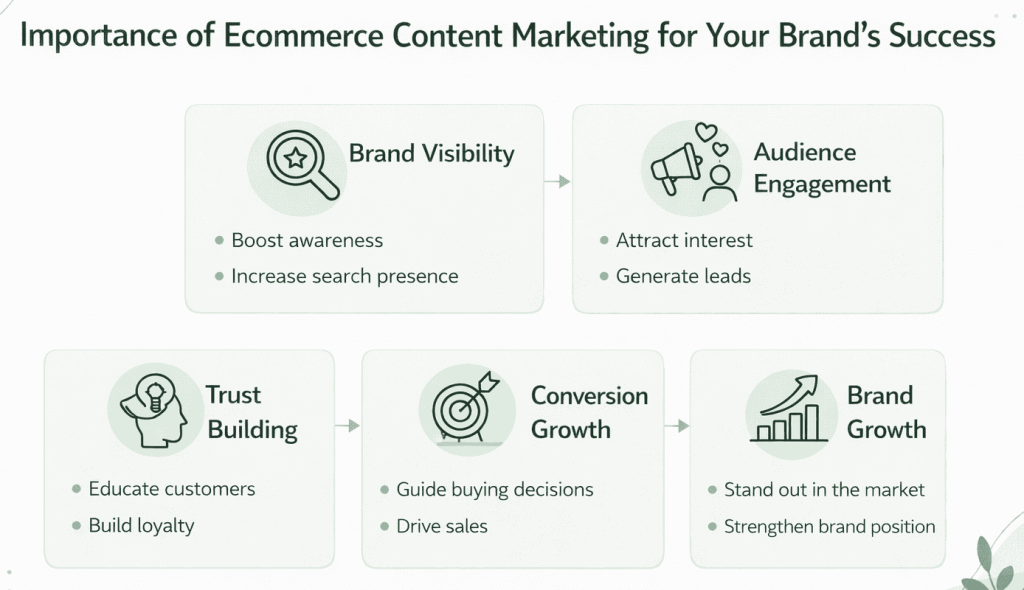
Why Is It Important to Have an Ecommerce Content Strategy?
Your content needs to do more than look good; it needs to drive sales. To accomplish that, it must be visible and discoverable. A good ecommerce content marketing strategy ensures that your content resonates with your target audience, builds trust among them, and drives sales.
With a good content strategy, your brand will stand out rather than blend into the noise.
7 Steps to Build an Effective Ecommerce Content Marketing Strategy
Great content can drive real sales. Now, discover how to develop an ecommerce content marketing strategy that turns casual browsers into loyal buyers
Step 1: Identify Your Target Buyer Persona
This is an attempt to define who your ideal customer is. It helps you understand their problems and know how to tailor your content to better speak to them.
To build your buyer persona, you need to ask yourself the following questions:
- Who are they (location, age range, occupation, interests)? (e.g., a 28-year-old professional in Lagos who enjoys fashion and online shopping)
- What’s their biggest pain point or challenge? (e.g., difficulty finding affordable yet high-quality skincare products)
- Where do they shop or search for product information? (e.g., Instagram, Pinterest, local boutiques)
- What do their daily activities look like? (e.g., commuting to work, attending social events, browsing social media in the evenings)
The most important thing to do after gathering this information is to figure out how your content can solve their problem. Creating a buyer persona helps you create and distribute content in a way that resonates with your audience and boosts user engagement.
Step 2: Understand How Your Audience Consumes Content
Before creating content, you need to study how your audience consumes it. What platforms are they most active on? Where do they search for product information? Understanding this helps you streamline your online presence to the platforms most used by your audience, whether blogs or social media channels.
Step 3: Research Content That Resonates
After knowing who you are talking to and where to find them, the next step is to understand the kind of content they like.
You need to know:
- The type of content that performs best on the channels.
- The type of keywords or hashtags that you should use to boost your visibility.
- The kind of content that your competitors are using to draw engagement.
- What kind of content have you noticed boosts engagement the most on your platform?
It is important to pay attention to your customers’ engagement on your platform. Check if your posts are getting likes, comments, and shares and whether the feedback and ratings are positive or lukewarm. Also, monitor if users are engaging with your blogs and if other users are linking to your posts. Tweak your content and your distribution strategy based on your findings.
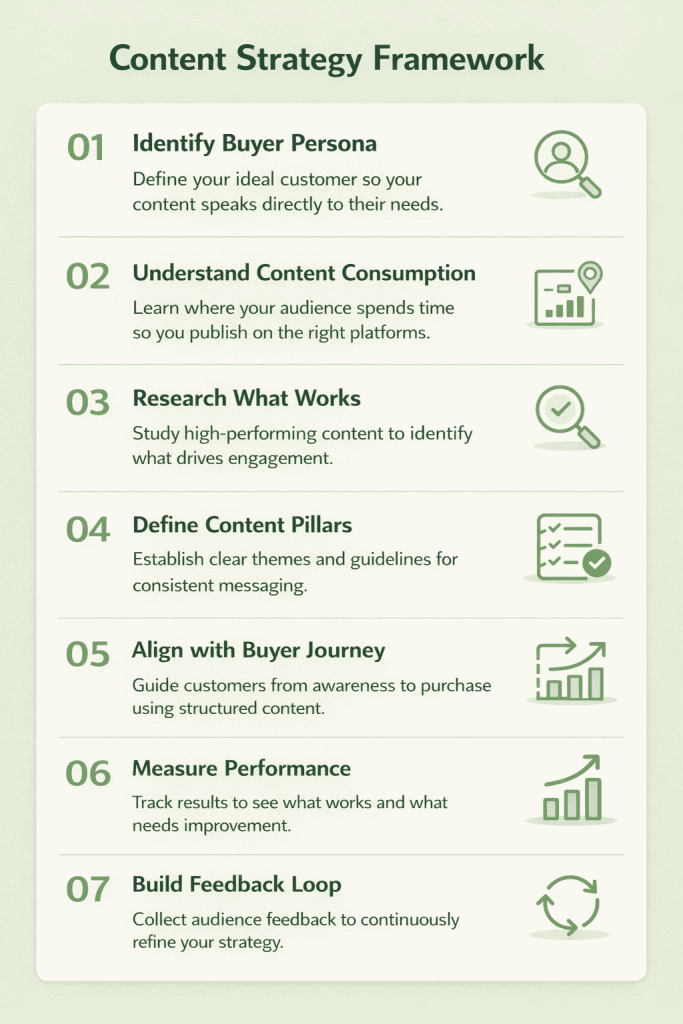
Step 4: Define Your Content Pillars and Brand Style
Content pillars form the foundation of your content strategy. They consist of three to four themes that tie deeply to your brand’s core message. After creating your content pillars, the next step is to create a style guide that ensures consistency across all your posts, i.e., post layout, colours, tone, etc. You need to decide on:
- Tone: Is your brand casual, professional, or a mix of both?
- Suggested Heading: Is your brand going to send an old-school vibe, or is it going to be modern, polished, and timeless?
- Theme: What would your brand look like in terms of colors and other aesthetics?
This ensures consistency across all your content and creates a clear image of your brand in the minds of your audience.
Step 5: Align Content with the Buyer’s Journey
Your content needs to tell a story—one that takes your customer on a journey from learning about your product to understanding why they need it and finally to making the purchase. This is usually referred to as a sales funnel. A good content marketing strategy guides the customer through all three stages of the funnel.
Step 6: Measure and Analyze Results
This is a very important aspect of an ecommerce content marketing strategy. It is necessary to know how your content is performing so you understand what to continue doing and what can be improved. Here are some important metrics you should measure:
- Website traffic: Check if you are getting more visitors and where they are coming from.
- Time on page: This shows if your users are actually engaging with your content.
- Bounce rate: Are visitors leaving your page as soon as they arrive, or exploring further?
- Conversions: How many of your visitors are taking the desired action?
- Keyword rankings: Check your rankings for desired keywords using SEO tools like SEMrush and Ahrefs.
- Click-through rate (CTR): This measures the percentage of people who saw your post and actually clicked on a link.
- Pages per session: This measures user engagement, tracking how many pages visitors view when they visit your website.
- Social shares and mentions: This shows how often your content is mentioned on social media.
Step 7: Create a Feedback Loop with Your Audience
The easiest way to know what your audience likes is to ask them. You can do this using polls or surveys that can be easily completed. Learn what you are doing right and continue it. Learn what you are doing wrong and improve on it.
Quick Tip
You cannot create content for people you don’t know. To create the kind of content that converts, you need to understand what interests your target audience, what their pain points are and what kind of content they engage with.
8 Effective Types of Content for Ecommerce Content Marketing with Examples
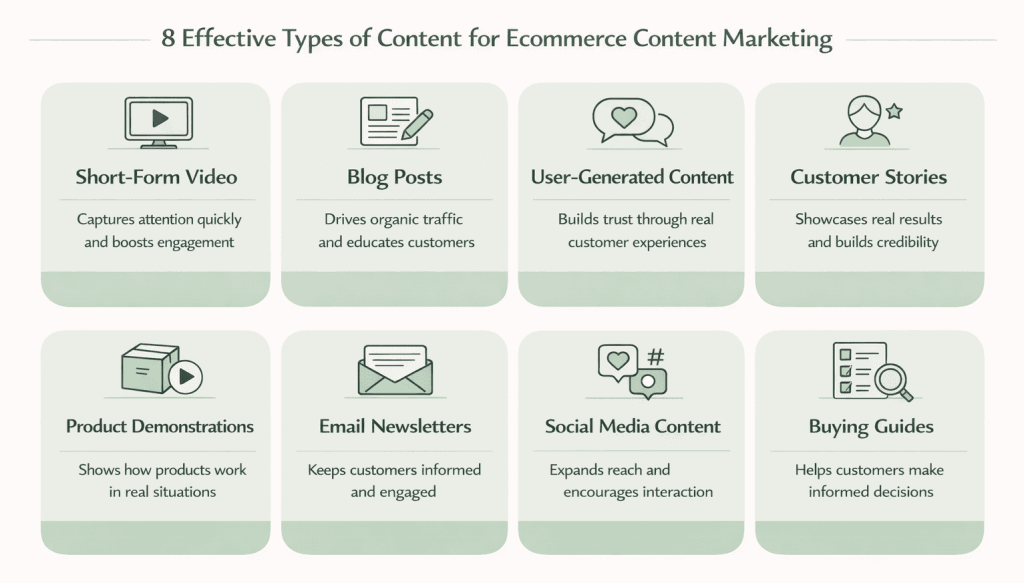
The kind of content you use on your platform depends on your brand style and your customer base. However, here are some major types of content used by ecommerce brands. This section also shows examples of brands using different forms of content for their ecommerce content marketing.
Short-Form Video Content
The popularity of platforms like TikTok and Instagram has made short-form video content very popular. Short-form videos capture the attention of viewers fast, keeping users scrolling, turning this content form into an engagement engine.
Ecommerce content marketing example: Duolingo
The Duolingo TikTok account has shown how to build brand affinity through humor and viral trends. The page has racked up millions of views, and the app is the most downloaded language app in the store.
Blog Posts
Blogs are a great medium to generate organic traffic and drive sales. Users can create educational content that drives user engagement, thereby boosting brand relevance. You can post content like how-to guides, product comparisons, expert opinions, or interviews, as well as listicles, on your blog.
Ecommerce content marketing example: The Klog, owned by Soko Glam, clearly shows how blogs can be used for content marketing. They use their blog to showcase products and rank for keywords within their niche, which is beauty. This draws the attention of customers interested in Korean beauty trends.
User-Generated Content (UGC )
UGC is a treasure trove in the content creation industry. It helps brands build trust and customer loyalty. Have your customers do a review, social media post, or video testimonial customers showcasing your product using incentives. You can also feature on your social media platforms.
Ecommerce content marketing example: Glossier
Glossier frequently features customer photos and reviews on its Instagram page. By highlighting real users sharing their experiences, Glossier builds trust, encourages engagement, and strengthens brand loyalty.
Customer Stories and Case Studies
Another way of building trust and loyalty among customers is by telling the stories of those who have used your products. Sharing customer testimonials and showcasing your products on review platforms like G2 helps your brand stand out.
Quick Tip
When done right, ecommerce content marketing can help you draw customers in, earn their trust and also secure their loyalty for the long term.
The Best Content Marketing Tools for Ecommerce Brands
- Google Analytics – for tracking website traffic, user behavior, and customer conversions.
- Hootsuite – for content scheduling and content performance tracking.
- SEMrush – helps you track your site’s SEO, keyword rankings, and how your content is performing on search engines.
- Jasper AI – for creating digital content with consistent brand messaging.
- Contently – best all-in-one content marketing platform.
- BuzzSumo – best for finding content influencers.
Expert Tip
Your content should have a clear focus, and it should solve your customer’s problem. Producing Clear, focused content help you build trust with your customers and improves conversions.

Quick Tips for Optimizing Your Content Performance
The following tips will help you optimize content performance and improve sales for your ecommerce brand:
- Adapting to changing trends: The digital market changes every day, and so does customer behavior. Learning what is working now and how to incorporate it into your business is a sure way to keep your content fresh and engaging at all times.
- Refining targeting and messaging: Check what is performing best in your content and what your competitors are posting. Leverage these forms of content for better engagement.
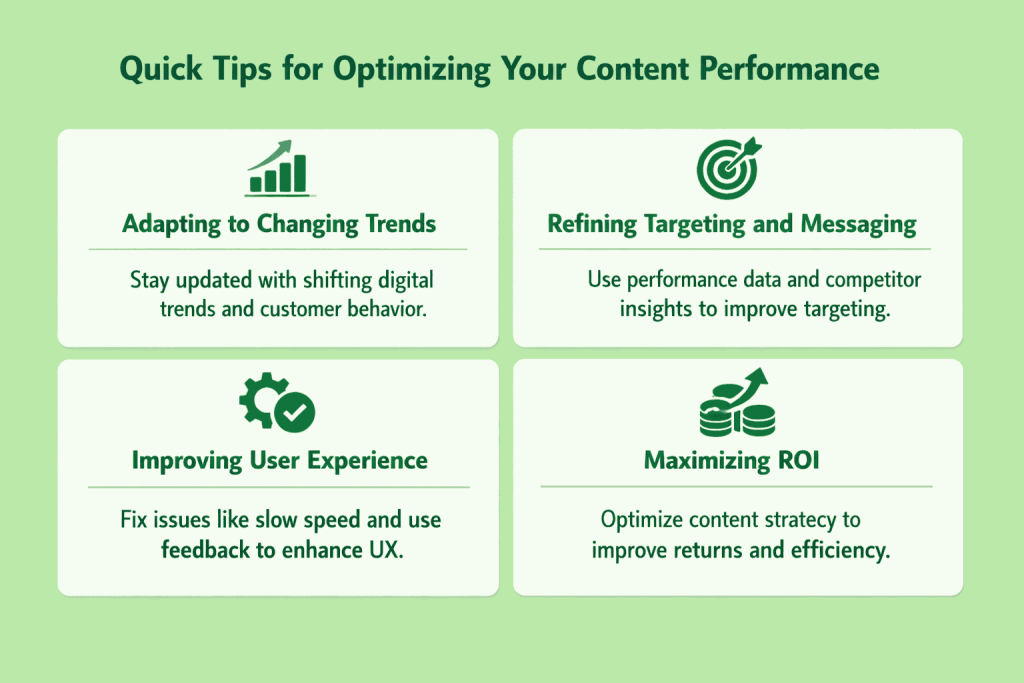
- Improving user experience: Use customer feedback to boost user experience. If you experience high bounce rates, for example, find out why and fix issues like slow page speeds and website downtime.
- Maximizing ROI (Return on Investment): Consistently improving your content marketing strategy helps you optimize your resources and experience better returns on your investment.
Reliable Hosting for Your Ecommerce Site
Enjoy reliable website performance. fast load times and easy ckeckouts with Hostonce secure ecommerce hosting for online stores
Conclusion
Content marketing is very important for ecommerce brands looking to boost their sales and increase their customer base. To excel at ecommerce content marketing, you need an impeccable content strategy that ensures your content aligns with your target audience, reaching the right people at the right time. To achieve this, you need to build a buyer persona and strategically distribute your content. With the right content strategy, your brand moves from blending in with the noise to standing out to your target audience.
FAQs
Why is ecommerce content marketing important for online stores?
Ecommerce content marketing helps brands stand out in a competitive market, improve visibility on search engines, nurture customer trust, and guide users through the buying journey, ultimately increasing conversions and customer loyalty.
What are some effective ecommerce content marketing examples?
Effective ecommerce content marketing examples include short-form videos like Duolingo’s TikTok content, educational blog posts such as The Klog by Soko Glam, and user-generated content used by brands like Glossier to build trust and engagement.
How does content marketing for ecommerce sites increase sales?
Content marketing for ecommerce sites educates potential customers, addresses their pain points, and builds credibility. By aligning content with the buyer’s journey, brands can influence purchasing decisions and improve conversion rates.
What types of content work best for ecommerce brands?
Some of the most effective content types include blog posts, short-form videos, user-generated content, customer stories, case studies, and product-focused educational content. The best format depends on the brand style and target audience.

ECommerce Merchandising Strategy: 10 Proven Tactics to Boost Online Sales
By Hamza Aitizad on August 9, 2025
Hostonce is the #1 WordPress Host
Ranked by 930+ customers in G2's Best Software Awards.